Ivan Karamazov’s brain fever and hallucinations
The Brothers KaramazovIvan Karamazov’s brain fever and hallucinations mark the point at which his physical illness and inward crisis become impossible to separate. On the eve of a severe attack, he sits nearly aware of his own delirium, staring at what appears to be a visitor on the sofa opposite him. The scene makes uncertainty part of the illness: Ivan recognizes the apparition as unreal even as it occupies his attention, and the knock at the window will soon test the boundary between nightmare and waking life.
Illness and Warning
The narrator announces that Ivan is on the verge of brain fever, an attack that will ultimately master a health already long affected. The account cautiously proposes that Ivan may have delayed the fever through a terrible effort of will. The suggestion connects the onset of the illness to the pressure of the immediate moment: Ivan needs all his wits to speak boldly and resolutely and to justify himself to himself. The fever is therefore presented not simply as a bodily event but as a crisis arriving while Ivan is trying to answer to his own conscience.
Ivan has consulted a new doctor, brought from Moscow at the suggestion of Katerina Ivanovna. After listening to and examining him, the doctor concludes that Ivan is suffering from a disorder of the brain. Ivan has reluctantly admitted enough to make hallucinations a concern. The doctor says, “Hallucinations are quite likely in your condition,” advises that they be verified, and urges him to take steps without delay. Ivan does not follow this advice. He dismisses the subject, deciding that he is strong enough and that, if he collapses, someone may nurse him then. His refusal leaves the danger unaddressed as the attack advances.
The Apparition and Ivan’s Recognition
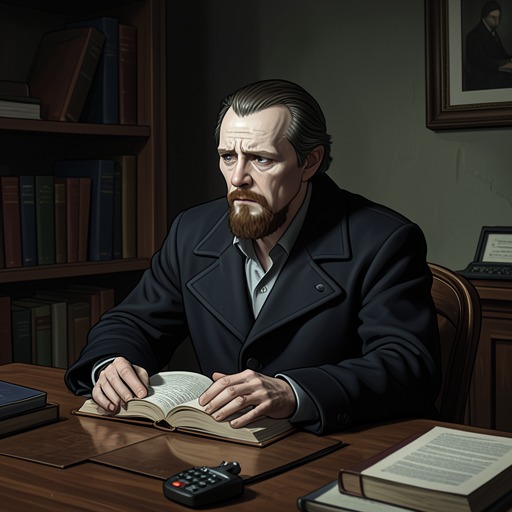
As the illness approaches its height, Ivan sits almost conscious of his delirium and persistently watches an object on the sofa across the room. Someone seems to be sitting there, though the narrator does not treat the appearance as an independently verified visitor. The apparition speaks as if it has appeared before, suggesting a recurrence within Ivan’s experience; Ivan’s response makes his interpretation explicit. He cries, “Never for one minute have I taken you for reality,” and calls the figure a lie, his illness, a phantom, and his hallucination. He describes it as an incarnation of himself, but only of one side of him.
That recognition does not make the encounter easy to dismiss. Ivan insists that he has never believed the figure real, yet says he does not know how to destroy it and expects to suffer for a time. The apparition is thus presented simultaneously as an externalized presence in the room and as a part of Ivan’s own self. The scene preserves the conflict between those descriptions rather than resolving it: Ivan can name the figure as a hallucination while remaining trapped in a conversation with it.
The Knock and the Waking Room
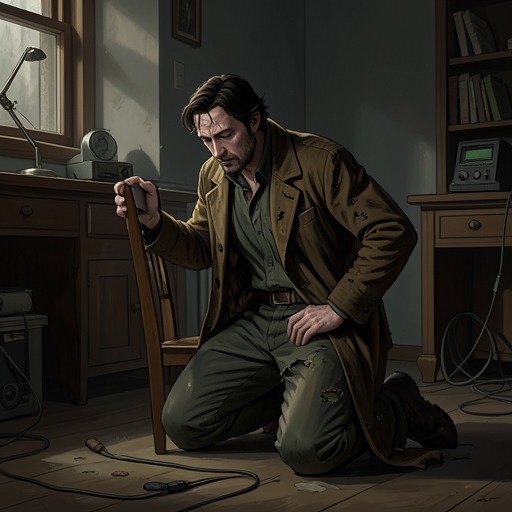
The persistent knocking at the window becomes the episode’s decisive change of scene. In the nightmare, Ivan wants to rush toward it, but feels his arms and legs fettered; he struggles in vain as the knocking grows louder. At last the chains break and he leaps from the sofa. The account distinguishes the dream’s intensity from the sound in the room: on waking, Ivan finds the knocking still going on, but it is subdued rather than thunderous. The visitor on the sofa is gone, and an object stands before him on the table.
Ivan nevertheless cries, “It was not a dream! No, I swear it was not a dream, it all happened just now!” He rushes to the window and opens the movable pane. Alyosha is there, despite Ivan’s earlier instruction not to come. The knocking therefore has a real source, but that fact does not settle the status of the apparition or erase the nightmare’s force. The ending leaves Ivan awake, agitated, and still asserting the reality of what he has just experienced even as the room supplies an ordinary explanation for the knock.